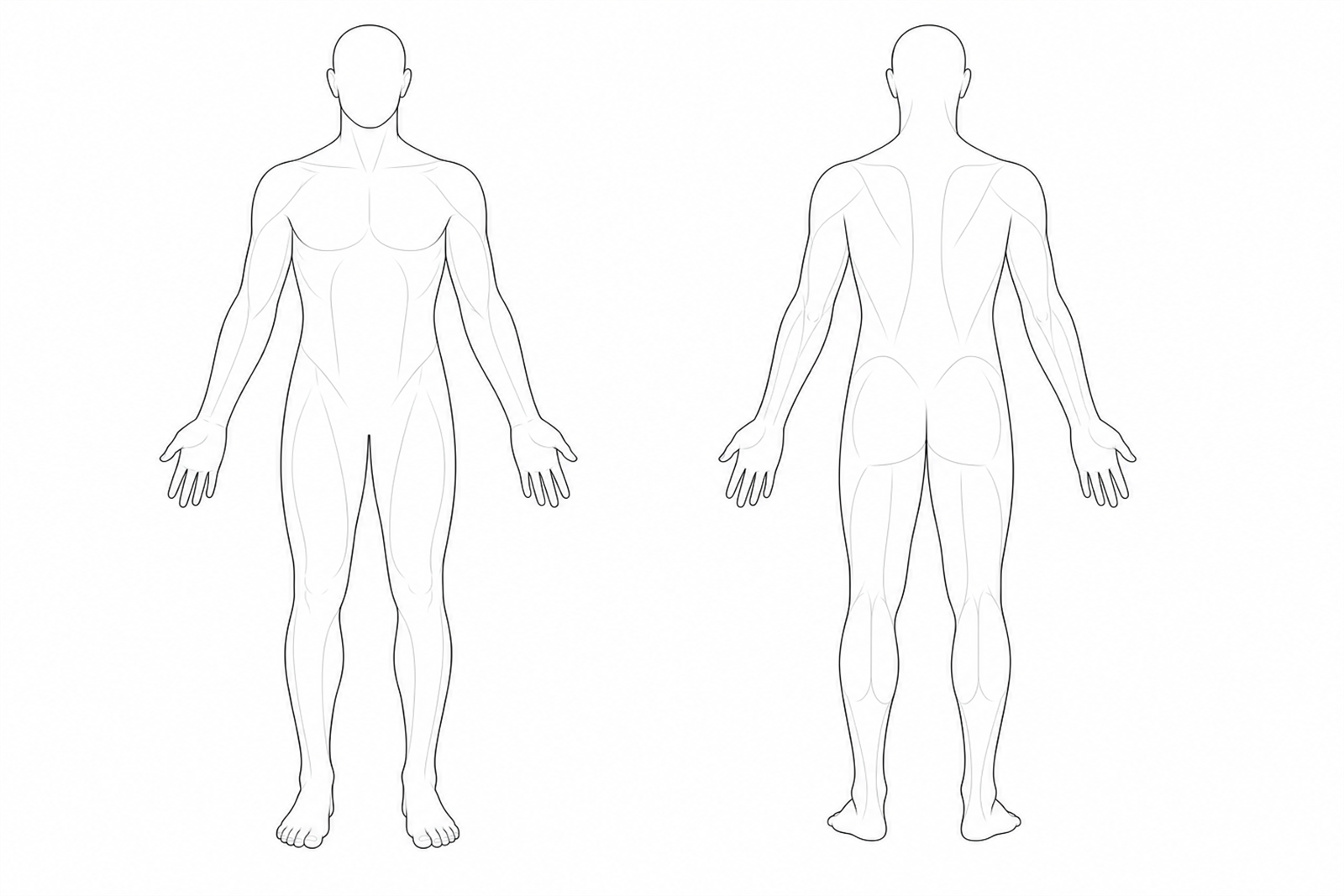
Anatomical map for location. Follow-up canvas for what changes.
Use pen, touch, or mouse; save the strokes with the record; return to patient history with the same visual context; and include the saved visual record in the printed clinical form.
The clinical ink
Put the therapist’s own mark inside the chart. Draw over anatomical maps or multi-page forms, keep measurements beside the note, and print the finished clinical record.
Book a demoThe clinical ink
Use pen, touch, or mouse; save the strokes with the record; return to patient history with the same visual context; and include the saved visual record in the printed clinical form.
Draft while the assessment is in progress, finalize when it is ready, and reopen through the authorized workflow when a correction is needed.
The patient workspace answers what is happening now. Patient history answers how the patient reached this point, with a separate chronological detail view.
Advance the numbered session count as care is delivered, correct it when an execution is reversed, and complete the program automatically at its planned total.
What it covers
Draw freehand with a stylus, touch, or mouse on anatomical body maps and multi-page clinical forms.
Save drawings to the patient chart and print them with the clinical form.
Capture physical-diagnosis drawings as part of clinical documentation.
Document SOAP-style sheets with measurements and a clear finalization status.
Use an ICD-ready diagnosis catalog alongside the clinical record.
Bring the patient’s clinical and operational context into one staff-facing workspace.
Review patient analytics and feedback statistics without leaving the system.
Physiotherapy operations, connected
We’ll walk through the parts that matter to your center, team, or rehabilitation department.